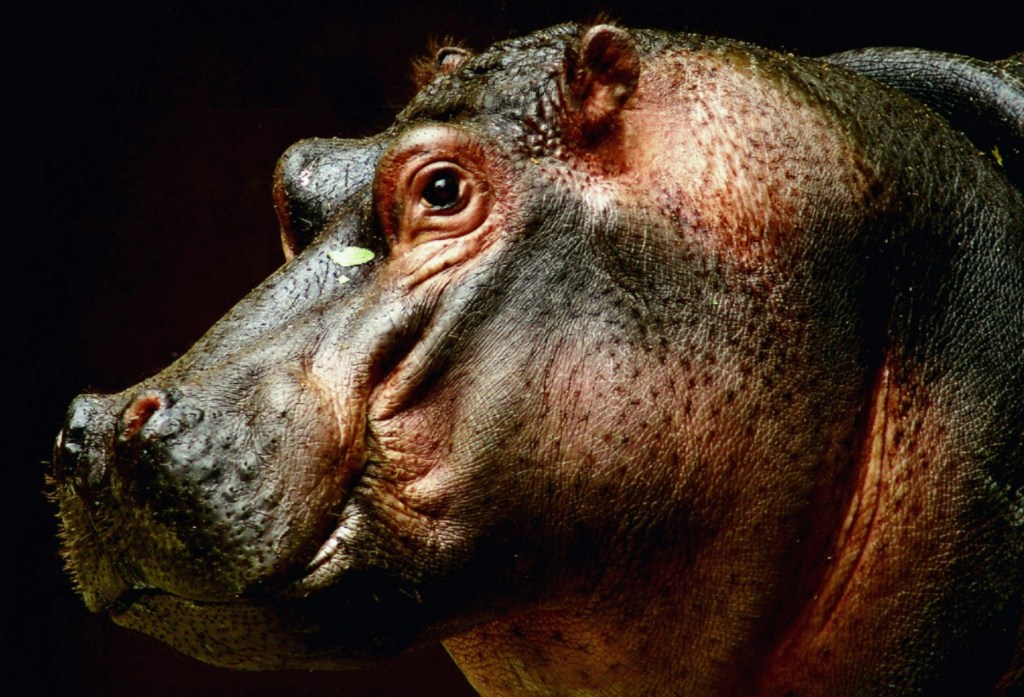
Image credit: Petra Andrews on Unsplash
‘Tell us a story, Granddad,’ ten-year-old Artie says.
‘Yes! Yes!’ eight-year-old Millie says.
‘Please, Ra-Ra,’ five-year-old Bertie says.
‘Go on, Granddad,’ three-year-old Ernie says.
‘OK. OK. Have you brushed your teeth?’
‘Yes,’ they chorus.
‘Gone to the toilet?’
‘Yes,’ they chorus.
‘Said your prayers?’
‘Come on, Granddad,’ Ernie says. ‘You’re stalling. You’re using the pagan rituals of a social construct used to suppress the masses whilst scrambling your synapses to come up with a story that will not only entertain us but also stimulate the production of melatonin in our pineal glands, thus inducing sleep and thus enabling you to sneak back to the TV via the fridge and gorge yourself on trans-unsaturated fatty acids while watching the last quarter of the football.’
‘OK. OK. Jesus, am I that obvious?’
‘Profanity Pot, Granddad,’ Artie says.
‘Sorry. Right, you lot, a bit of shush now. Once upon a time not that long ago in a land quite close by, there lived a devilishly handsome grandfather—’
‘Nooooo, Granddad!’ they chorus. ‘You’ve told us that story a thousand times. It’s so booooring!’
‘Have I? Sorry. What type of story would you like to hear?’
‘A mise en abyme preaching a universal moral,’ Artie says.
‘Me?’ Millie says. ‘I would like a bildungsroman that persuasively juxtaposes postmodern feminism with toxic masculinity.’
‘Tell us a feghoot,’ Bertie says, ‘ that has lots and lots of blood and guts and death and pineapple pizza and … and … and Chocolate Chip ice cream. But no kissing!’
‘How about a fractured apologue, Granddad,’ Ernie says, ‘combining the lyricism of Whitman, the drollery of Thurber and the minimalism of Aesop?’
‘Christ, what the hell are they teaching you kids at school these days?’
‘Profanity Pot, Granddad,’ Artie says. ‘By the way, Ernie’s just started kindergarten.’
‘Really? OK. And sorry about the profanity. Right. I’ve gotta say you’ve set me quite a challenge. I’m not sure about the pineapple pizza and Chocolate Chip ice cream, Bertie, but I’ll compensate with some gut-wrenching gore and a dire death. Now, let’s see … what to tell? … ummm … ummm … I’ve got one! Lady and gentlemen, my story is called In Finite Jest.’
‘Lame title, Granddad,’ Ernie says. ‘It sounds like a blatant rip-off of a clichéd Shakespearean quote, tweaked but still unable to hide your inadequacies and insecurities as a storyteller of originality. I think it was Freud—or was it Jung?—that said—’
‘Ernie!’
‘Yes, Granddad?’
‘Shut up and listen. But I’ll heed your advice. So, girl and boys, the new title of my story is The Hu—’
‘Granddad, is your story’s protagonist a woman?’ Millie says.
‘Yes.’
‘Is your story’s protagonist a transgender woman?’
‘No, I’m afraid not. If they were, I doubt my story would get past the sensitivity readers.’
‘Is your story’s protagonist a woman of colour?’
‘Yes.’
‘Is your story’s protagonist a woman of colour and with disability?’
‘Yes.’
‘Is your story’s protagonist a woman of colour and with disability and with a body shape and size that flouts the unrealistic beauty idealism purveyed by a salacious and misogynistic media?’
‘Yes.’
‘And is your story’s protagonist a woman of colour and with disability and with a body shape and size that flouts the unrealistic beauty idealism purveyed by a salacious and misogynistic media and a subaltern living in economic, social, political and geographical disadvantage exacerbated by an ongoing hierarchical power imbalance forged by a by-gone era of colonial imperialism—’
‘Millie!’
‘Sorry, Granddad.’
‘Thank you. Right, as I was saying, the title of my story is The Humorous Hippopotamus.’
‘Ooh! Ooh! So your story is about someone transgender! You do know, Granddad, that hippopotami are not sexually dimorphic—’
‘Millie! One more word, and you’ll be banned to the bottom bunk to join your cousins, both of whom have, yet again when sleeping over at their grandparents, avoided showering.’
‘Sorry, Granddad. The floor is yours.’
‘Thank you.’
***
The Humorous Hippopotamus
Once upon a time, not that long ago, a great river—indeed, the mighty River Nile, greatest of its continent—wound its way through the grand savannah of a land that had been ravaged throughout the centuries by drought, famine, war and pestilence and by the economic, social, political and geographical disadvantage exacerbated by an ongoing hierarchical power imbalance forged by a by-gone era of colonial imperialism. And in this river there was a bend, and at this bend there dwelt a big, brown hippopotamus named Raylene.
Her mother had wanted to name her Ray because she hoped her first-born daughter would be a ray of sunshine in her life, and although her father, still a little weak-kneed and green around his muzzle after witnessing the birth, wished to concur with his wife, he suggested that their daughter’s name be expanded to Raylene, for he observed their not-so-little ray of sunshine possessed stumpy left legs shorter than her stumpy right legs.
A not-so-little Raylene and her parents lived a peaceful, content, somewhat isolated life on their bend in the great river until one day, two months before her coming-of-age, a pride of lions attacked the bloat, and Raylene, seeing panic in her parents’ bulging eyes, took a huge breath, sank to the deepest point in the river she could find and hid for as long as she could. She surfaced an orphan and grieved hard for her dearly departed parents.
Now living by herself at the bend in the river, Raylene became lonely, so she tried to make new friends. She invited all the beasts of the savannah to her coming-of-age party, but no one RSVP’d and no one came.
Whenever any animal approached the bend in the river to slake their thirst, Raylene would swell with nervous excitement, and with upright ears and bulging eyes and swishing tail, she would raise her head above the surface and unhinge her huge mouth and say, ‘H-H-Hi, I-I-I’m R-R-Ray. W-W-Wanna be my friend’ And the animal would either befoul the waters of the great river in fright or, more often than not, fall over themselves in laughter and ridicule the huge hippo with her outrageous stammer.
The more the beasts of the savannah laughed at and ridiculed Raylene, the more anxious she became, and the more anxious she became, the higher her ears stood and the bigger her eyes bulged and the faster her stumpy tail swished and the wider her mouth unhinged, and the higher her ears stood and the bigger her eyes bulged and the faster her stumpy tail swished and the wider her mouth unhinged, the more the cruel beasts of the savannah laughed at and ridiculed her. Caught in this vicious cycle of ridicule and rejection, Raylene’s anxiety turned to a deep depression and her stammer worsened, and throughout the savannah she became known as Hippity Hip-Hip-Hippo.
One afternoon, a startled ibis paused to draw breath between hysterical giggles, and Raylene said to the bird, ‘W-W-What’s wrong with me? W-W-What can I do to make others like and respect me?’
The ibis raised its black bill and said, ‘Self-improvement! That’s what you need, my dear. Self-improvement!’
Sage advice, Raylene thought. But what to do? How could she go about improving herself to make others like and respect her?
Maybe no one would befriend her due to her appearance. She waded out of the river and turned her head and looked at her reflection in the water and saw a big, brown hippo frowning back at her. She swivelled her head from side to side and pondered whether to go on a diet. But what’s the point of starving oneself when cursed with a mother’s big-bonedness? She pointed her booty at the water and said, ‘Does my bum look big in this reflection?’ The river kept silent. ‘Damn!’ she said. ‘Those still waters must add at least a couple of hundred pounds!’ And she cursed her father’s big-bummedness.
Why not focus on little improvements? Like training her ears to rest a little flatter and her eyes to bulge a tad less and to stand in a less confrontational manner with her back to an approaching animal and to turn her head demurely and look back over her shoulder and beam a toothy smile that radiated positivity and friendliness? Yes, that sounded like a good start.
Maybe she was friendless because she lacked charisma? Maybe she should hire a life coach and have them teach her to use mindfulness and meditation to improve her presence, her warmth, her power, her self-belief? Did any such professionals practise on the savannah or by the river? Then again, maybe not; she could neither hum nor cross her legs nor stomach tofu.
Should she try to be a better listener and not interrupt others as they prattled on and on and on about themselves, their problems and their ailments? Should she improve her listening face, her interested face, her empathy face, in the hope a confidant became a friend? But that was the problem, wasn’t it? Her face. Her ears. Her eyes. Her unhinged jaw.
Raylene continued to think long and hard about her predicament until she suddenly realised what she needed to do. It was simple. The key to forming and maintaining friendships was to be an engaging conversationalist. But what to discuss? Politics? The Arts? Current Affairs? Sport? Savannah gossip? No, too boring. She unhinged her mouth and released a huge yawn. Again, she thought long and hard until she said, ‘A-ha! Pop Quiz: What do friends love more than anything? Answer: To share a good laugh.’ Yes, that’s what she would do. Tell a joke. Build rapport and form an emotional connection. Get them to laugh with her, not at her. And through mutual mirth, they’d no doubt become friends.
But what to tell? Maybe she could tell one of those clichéd hippocratic oath or hippocampus or hipponosis or hippothermia or hippochondria or hippocrite riddles? No, too clichéd. Besides, everyone knew the punchline.
What about an amusing ditty, something bubbly along the lines of ‘Hip-po-dee-doo-dah, hip-po-dee-ay / My, oh, my, what a wonderful day’? No, copyright issues.
How about an amusing joke with a killer punchline? Yes, that was it. Perfect. But did she know any jokes? No? Well, she’d just have to make one up. But about what? The world of jokes was a minefield these days, what with having to step around political incorrectness, cultural appropriation and taboo topics. No, she’d just have to play it safe and tell what she knew. Yes, “lived experience”. That’s what her joke needed. And she lowered her head in the river until only her ears, eyes and nostrils sat above the water, and all day she worked on her amusing joke to be. By late afternoon, she’d completed it.
At dusk, a cackle of hyenas approached the bend in the river, snarling and narky. The leader of the cackle spotted Raylene in the river and called out, ‘Hey, Lard Arse, you’re just what we need for dinner.’ The hyenas bared their fangs and growled.
‘It’s showtime!’ Raylene whispered to herself.
She pinned her ears back and squinted her eyes and willed her mouth not to unhinge too much. She then turned her back to the cackle and looked over her shoulder and smiled.
‘H-H-Hi, I-I-I’m R-R-Ray. W-W-Wanna hear a joke?’
The cackle neither shit themselves nor ridiculed nor cackled at Raylene; rather, they pondered her request.
‘A joke, you say, Fatso?’ the leader said.
‘Yes, yes,’ she said. ‘An attempt at humour. My very first. I’ve been working on it all day.’
‘Oh, very well, if you must, Porky, but do hurry, for once you’ve finished, me and the lads here are going to tear you apart and devour you. Don’t say we didn’t warn you.’
Raylene coughed, cleared her throat, cast her eyes down at the feet of the hyenas and said:
 martinsmithstories